
Canless Recessed Lighting: Mud-In Finish at Wafer Depth
By Ridgecrest Lightworks
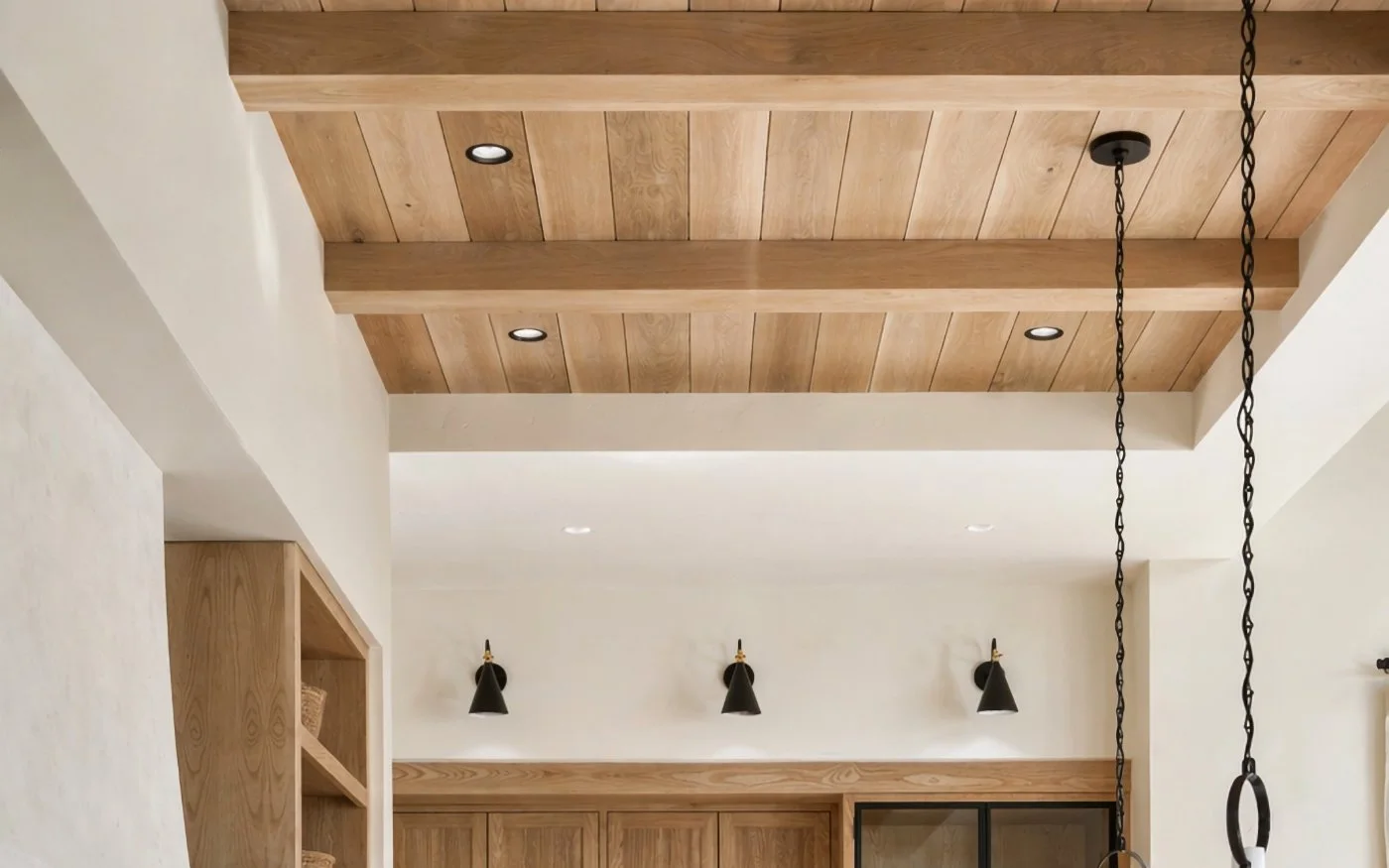
Canless recessed lighting was supposed to make layout easy. In practice, it gave designers two choices, and neither one was the light they wanted.
The two options until now
A traditional mud-in is the architectural choice. The fixture is plastered into the ceiling, so all you see is light coming out of a clean opening. But a traditional mud-in needs real depth above the ceiling. It has to miss every joist, beam, duct and pipe, and it only mounts drywall. On a real job, that means the lighting plan bends around the framing instead of the room.
Wafer lights, the canless "pancake" lights, solved the depth problem. A wafer light sits within the drywall and does not stick out past the back of it, so it fits almost anywhere on the ceiling. The trade-off is how it looks. From below, it reads as a white pancake stuck on the ceiling, not as part of the ceiling. For a lot of designers, that was the compromise they did not want to make in a finished room.
A third option: mud-in at wafer depth
LumiSlim is the world's first patented mud-in wafer-thin recessed light. It gives you the plastered-in, architectural finish of a traditional mud-in at the depth of a wafer light. The full mounting depth is 5/8 inch, so it clears joists, ducts and plumbing in places where a traditional mud-in cannot go.
That changes how a lighting plan gets made. The fixture goes where the room needs light, not where the framing happens to leave a gap.
How it installs
LumiSlim is built from three parts: a mud ring, a driver module and a light module.
- Cut the opening with a 4 3/8 inch or 4 1/2 inch hole saw.
- Spray glue around the opening and the back of the mud ring.
- Screw the mud ring to the drywall.
- Mud in the ring, the same way you would finish any mud-in.
- Wire in the driver module.
- Install the light module.
There is no junction box to set and no deep housing to hang. Watch the full installation on our installation page.
Where it makes the biggest difference
- Ceilings with tight joist bays or ductwork overhead.
- Remodels where opening the ceiling to move framing is not an option.
- Rooms where the design calls for a clean, plastered-in look but a traditional mud-in will not fit.
Planning your layout
Start with where the light should land in the room, then check the ceiling for obstacles. Where a traditional mud-in hits framing or ducts, LumiSlim's 5/8 inch depth usually clears them. For trade pricing on larger projects, see our trade program.
See LumiSlim in your own ceiling
5/8″ deep, with mounts for drywall, wood, metal and existing can openings.